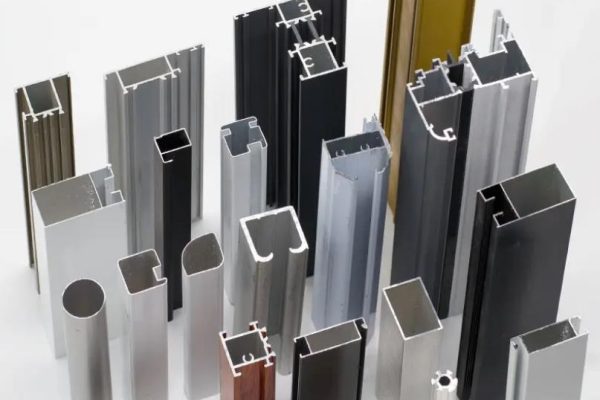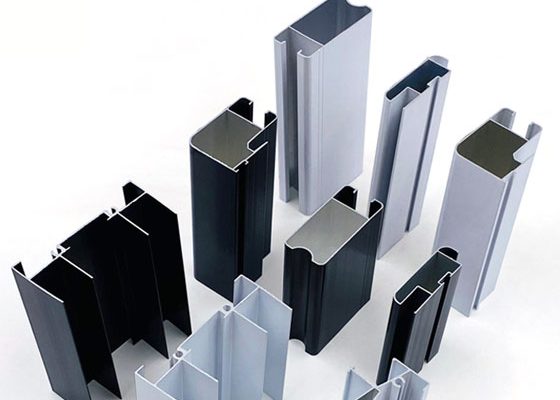


Aluminium extrusieprofiel voor deuren en ramen is een soort bouwmateriaal voor deur- en raamkozijndecoratie, gemaakt van een aluminiumlegering als grondstof. De voordelen zijn een goede winddrukbestendigheid en onbrandbaarheid, en het is een erkend vlamvertragend materiaal.
Deuren en ramen van aluminiumlegeringen verwijzen naar deuren en ramen gemaakt van geëxtrudeerde profielen van aluminiumlegeringen als frames, stijlen, en ventilatoren. Ze worden deuren en ramen van aluminiumlegeringen genoemd, of kortweg aluminium deuren en ramen. Deuren en ramen van aluminiumlegering omvatten deuren en ramen gemaakt van een aluminiumlegering als basismateriaal van het krachtdragende onderdeel (het lid dat zijn eigen gewicht en last draagt en overbrengt), en hout- en kunststofcomposieten.
Het productieproces van deuren van aluminiumlegering en raam profielen omvat drie belangrijke processen: smelten, extrusiegieten, en kleuren. Het kleurproces omvat drie opties: anodische oxidatie, lucht oxidatie, en fluorkoolstofverf.
1. Smelten is het primaire proces bij de productie van deur- en raamprofielen van aluminiumlegeringen
1. Grondstoffen, volgens de daadwerkelijke profielen van aluminiumlegeringen die moeten worden geproduceerd, bereken de hoeveelheid verschillende toegevoegde componenten van aluminiumlegeringen, en effectief matchen met verschillende grondstoffen;
2. Smelten: De geselecteerde grondstoffen worden aan de smeltoven toegevoegd om te smelten volgens de voorschriften van de verwerkingstechnologie, en de slakken en het gas in de smelt worden redelijkerwijs verwijderd volgens de ontgassing- en slakkenraffinagemethoden;
3. Smeden: Onder bepaalde smeedprocesnormen, de gesmolten aluminiumvloeistof kan na waterkoeling worden omgezet in ronde gietstaven met verschillende specificaties en modellen volgens de systeemsoftware voor het smeden van diepe waterputten.
Het extrusiegieten wordt uitgevoerd op een automatische productielijn bestaande uit blokverwarming, extrusie, koeling, spanning rechttrekken, zagen en andere processen.
De apparatuur op de productielijn omvat een inductieverwarmingsoven, extrusie machine, oven tafel, afvoer transportband, profielhef- en overbrengingsapparaat, koelbed, spanningsnivelleerder, opbergtafel, tractor, zaagmachine, enz.
1. Inductieverwarmingsoven, de verwarmingstemperatuur van de staaf wordt in het algemeen geregeld op 400 °C~ 520 ° C, als de temperatuur te hoog of te laag is, het heeft een directe invloed op het extrusiegieten. De extrusiemachine gebruikt over het algemeen een enkelwerkende hydraulische pers, en de tonnage ligt tussen 1200 ton en 2500 tons.
2. De diameter van de extrusiecilinder van de extrusiemachine varieert met het tonnage van de extrusiemachine. Hoe groter het tonnage van de extrusiemachine, hoe groter de diameter van de extrusiecilinder.
De diameter van de extrusiecilinder ligt over het algemeen in het bereik van 150 mm ~ 300 mm. De werktemperatuur van het extrusiegereedschap bedraagt 360°C~460°C, en de extrusiesnelheid is 20 m/min~80m/min. Extrusiegereedschappen omvatten voornamelijk matrijzen. Extrusiematrijzen zijn onderverdeeld in platte matrijzen, gesplitste sterft, tongmatrijzen en splitter-gecombineerde matrijzen volgens hun structurele kenmerken. Bij de productie van deur- en raamprofielen van aluminiumlegeringen wordt meestal gebruik gemaakt van vlakke matrijzen en gespleten matrijzen.
3. De afvoertafel ontvangt het uit de extruder geëxtrudeerde profiel en brengt het profiel over naar de afvoertafel. Het grootste deel van de afvoerwerkbank is een horizontaal striptransportmodel, en de bewegingssnelheid van de horizontale strook wordt gesynchroniseerd met de extrusiesnelheid.
4. Het koelbed is grotendeels van het loopbalktype, en hieronder is een aanzienlijk aantal ventilatoren geïnstalleerd om een gelijkmatige koeling van de profielen te garanderen, zodat de temperatuur van de profielen vóór het richten lager is dan 70°C.
5. De spanningsrichtmachine is uitgerust met torsiebekken, die kan strekken en strekken tijdens torsiecorrectie. Na de spanningsregelaar bevindt zich de materiaalopslagtafel, die profielen levert aan de zaagmachinetafel, en de zaagmachine zaagt de profielen volgens de vaste lengte.
Kleurbehandeling van deur- en raamprofielen van aluminiumlegering
De oppervlaktebehandeling van deur- en raamprofielen van aluminiumlegering is grotendeels geanodiseerd om het oppervlak van de profielen zilverwit te maken. Oppervlaktebehandeling kan het uiterlijk van het profiel verbeteren en de levensduur van aluminium deur- en raamprofielen verlengen.
Anodisatieprocesstroom: laden → ontvetten → wassen met water → alkalisch etsen → wassen met warm water → wassen met koud water → neutraliseren van licht → wassen met water → anodiseren → wassen met koud water → wassen met warm water → afdichten → drogen → lossen → inspectie van het eindproduct → verpakken. De dikte van de oxidefilm na anodische oxidatie van aluminium deur- en raamprofielen is niet minder dan 10 urn.
Ook de oppervlaktebehandeling van aluminium deur- en raamprofielen kan ingekleurd worden. Aluminiumprofielen die andere kleuren vereisen, kunnen worden verkregen door natuurlijke oxidatiekleuring, elektrolytische kleuring en dompelkleuring.
6061 6063 Aluminium profielen fabrikant RAYIWELL MFG uit China. Aluminium profielen kunnen worden onderverdeeld in 1024, 2011, 6063, 6061, 6082, 7075 en andere legeringskwaliteiten van aluminium profielen, waarvan 6 serie is de meest voorkomende. Het verschil tussen verschillende kwaliteiten is dat de verhouding van verschillende metaalcomponenten verschillend is, behalve de veelgebruikte aluminium profielen voor deuren en ramen. Naast architectonische aluminium profielen zoals 60 serie, 70 serie, 80 serie, 90 serie, en vliesgevelserie, er is geen duidelijk modelonderscheid voor industriële aluminiumprofielen, en de meeste fabrikanten verwerken ze volgens de daadwerkelijke tekeningen van klanten.
Aluminium extrusieprofiel worden geproduceerd door aluminium knuppels door een metalen matrijs te duwen om de standaard of aangepaste vormen te verkrijgen. Wij kunnen geëxtrudeerde profielen produceren met een gewicht per meter variërend van 0.10 Kg tot 50 kg, de grootste cirkelgrootte is maximaal 650 mm voor industriële toepassingen. Met interne verwerkingsmogelijkheden voor oppervlakteafwerking, al onze aluminium profielen kunnen in gewalste afwerking worden geproduceerd, geanodiseerd of gepoedercoat in gewenste kleuren.
Aluminium extrusieprofielen worden vooral toegepast in de bouw- en meubelsector, in de automobielsector en in de transportsector. Wij kunnen vermelden, bijvoorbeeld, aluminium randen met schroefbevestigingen, afvoeren en waterdeflectoren, beglazing extrusies, fotolijsten, sierprofielen voor voertuigen, hoekelementen met speciale profielen, aluminium handgrepen en leuningen